
Our History
ORIGINS
Woking Golf Club was founded in 1893 and holds a special place in English golf as the oldest of the Surrey heathland courses. The Club was established by a small group of London barristers, members of the Inner Temple and Middle Temple, who secured a stretch of open heathland from the London Necropolis Company and created a course that would soon influence the wider game.
The original layout was designed by Tom Dunn, but it was the early twentieth-century development of the course under the guidance of two members, John Low and Stuart Paton, that shaped Woking’s lasting character. Their ideas, advanced for the time, placed the Club at the heart of an important moment in the evolution of golf course design.
While Woking’s membership long retained a legal flavour, reflecting its origins, today it draws from a broad range of professions, united by a shared respect of camaraderie, the game’s traditions and brisk two-ball golf, often in the company of a four-legged friend.
WOKING & GOLF ARCHITECTURE
For more than a century, Woking has been an essential point of reference for golf architects. Much of this reputation rests on the legacy of John Low and Stuart Paton, whose ideas helped move the game away from the rudimentary penal designs towards a more strategic philosophy. In short, their belief was that the game of golf should be a mental examination, as much as a physical one.
Their “overnight” introduction of central fairway bunkers on the 4th hole was controversial at the time, yet proved hugely influential. It placed Woking firmly in the conversation about what modern golf architecture could be.
Bernard Darwin later captured this perfectly when he described the course as a place where “the mind is as much tested as the swing”.
The story of Woking is that of a club that has never sought attention, yet has quietly shaped the way the game is played and designed.
A Club of Players and Thinkers
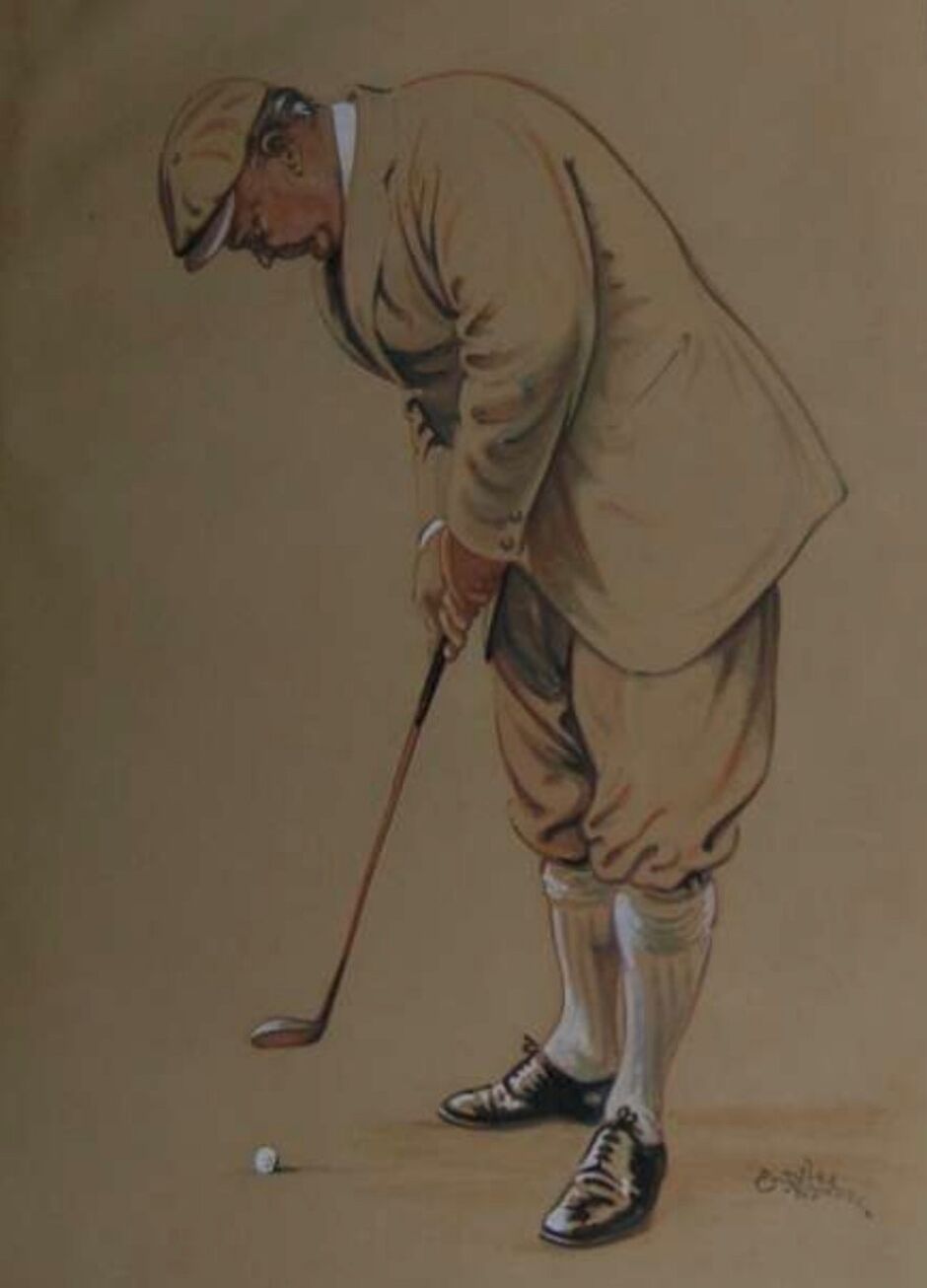
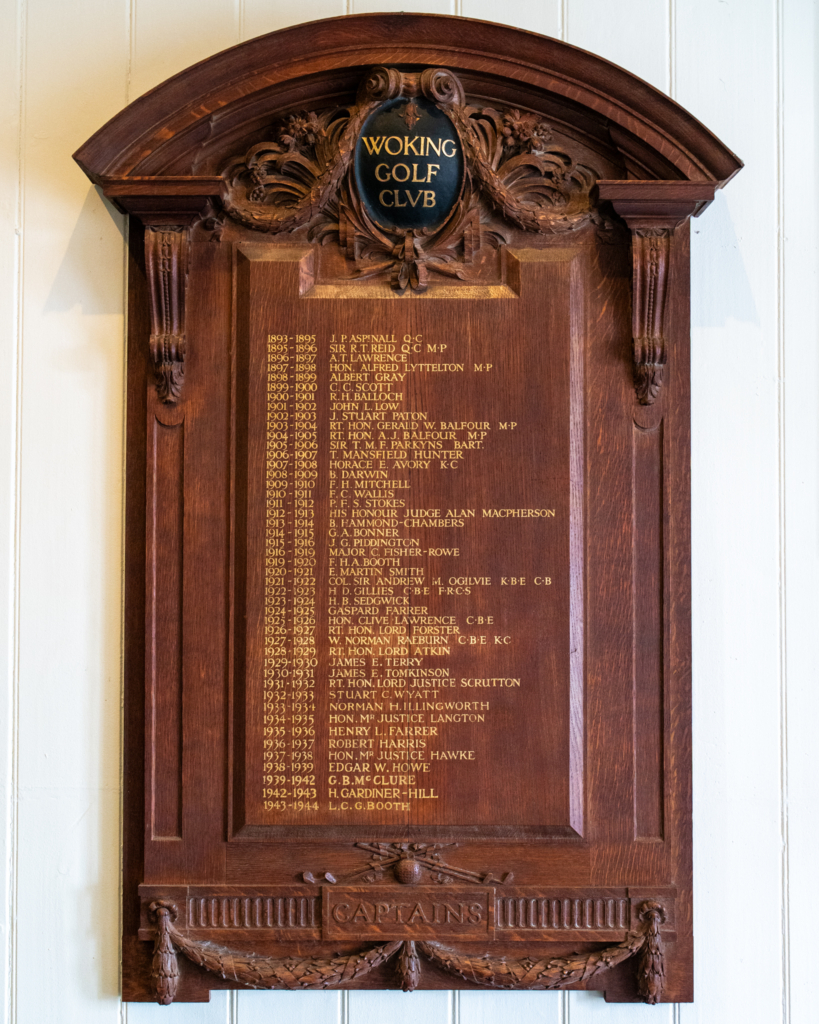
Woking has been associated with many notable figures in amateur golf and in the writing of the game. Bernard Darwin, Gerald Micklem, Doug Sewell and Roger Wethered all played much of their golf here, helping to shape the Club’s reputation for thoughtful, sporting golf.
Darwin once wrote of Woking that it demanded “judgement rather than strength”, a line that still feels entirely apt.
The Club’s competitive calendar reflects this heritage. The Bernard Darwin Trophy and the Gerald Micklem Trophy remain leading public school team events, while the Alba Trophy, held each June, continues as one of the most respected scratch foursomes competitions in the country.
In 1926, the American Walker Cup golf team, including Bobby Jones and Francis Ouimet, played a practice match against Britain’s “Moles Golfing Society” and lost 6-3 overall, a surprising defeat to the amateur society known for entertaining their American guests well the night before. The Moles did just that and whitewashed the hungover US side 5-0 in the morning session.
Woking is also proud to be the home of the Senior Golfers’ Society of Great Britain, one of the largest and most well-respected societies of our time.
Tradition and the Modern Course
Woking remains firmly in the traditional category of English golf – a course where two-ball golf thrives, with fourball golf only played in specific windows. Standards matter, but so does thoughtful progress. In recent years the course has been sensitively lengthened and now measures more than 6,600 yards from the back tees. Yet its enduring challenge lies not in yardage, but in the complexity of its greens.
Alongside this, the Club has invested heavily in stewardship of the heathland. A reservoir built in 2000 improved irrigation; comprehensive drainage and an extensive woodland management programme have all helped restore the open character of the course and re-establish the heather that defines it.
These efforts have been widely recognised. Woking is currently ranked 18th in the list of the top 100 courses in England and 77th in the World, and continues to be regarded as one of the most instructive places to play.